 Business License

Electromagnetic Flow Meter for Wastewater: 5 Things to Check Before You Buy
Electromagnetic Flow Meter for Wastewater: 5 Things to Check Before You Buy
Choosing an electromagnetic flow meter for wastewater is not simply a matter of matching the meter to the pipe diameter.
The wrong liner, electrode or meter size can cause unstable readings, rapid wear or unnecessary replacement costs. Before requesting a quotation, check the liquid conductivity, flow range, material compatibility and installation conditions.
Quick Selection Guide
| Application | Recommended Starting Configuration |
|---|---|
| Clean water | Rubber or EPDM liner with 316L stainless steel electrodes |
| Municipal wastewater | EPDM or rubber liner with 316L stainless steel electrodes |
| Abrasive slurry | Polyurethane liner with wear-resistant electrodes |
| Corrosive wastewater | PTFE or PFA liner with Hastelloy or other compatible electrodes |
| Underground pipeline | IP68 sensor with remote transmitter |
| PLC or SCADA system | 4–20mA with Modbus, HART or PROFIBUS |
These are general starting points. Final selection depends on the liquid composition, temperature, solids content and operating pressure.
Need a faster selection? Send WIKSTONE the liquid name, pipe size, flow range, temperature and pressure for a recommended configuration.
1. Can the Liquid Be Measured by a Magmeter?
An electromagnetic flow meter, also called a magmeter, measures electrically conductive liquids.
It is commonly used for:
Water and wastewater
Sewage and sludge
Conductive slurry
Acids and alkalis
Salt solutions
Paper pulp
Conductive food and beverage liquids
It is normally unsuitable for diesel, gasoline, lubricating oil, gases and steam because these media do not provide sufficient electrical conductivity.
Before selecting the meter, confirm the medium name and conductivity. This prevents choosing the wrong measurement technology at the beginning of the project.
2. Do Not Select the Meter by Pipe Size Alone
A DN100 pipeline does not always require a DN100 electromagnetic flowmeter.
The correct meter size depends on:
Minimum flow rate
Normal flow rate
Maximum flow rate
Required accuracy
Solids and abrasion
Acceptable flow velocity
An oversized flowmeter may produce low liquid velocity and unstable readings during normal operation. A smaller meter installed with reducers may provide better low-flow performance.
An undersized meter can increase liquid velocity and accelerate liner wear, especially when measuring abrasive slurry.
For accurate sizing, always provide the three flow conditions rather than only the maximum flow.
3. Which Liner Should You Choose?
The liner protects the measuring tube and isolates the conductive liquid from the metal body. Its chemical and abrasion resistance directly affect service life.
EPDM or Rubber
A practical choice for:
Clean water
Raw water
Cooling water
Municipal wastewater
General sewage
This is often the most economical configuration for standard water-treatment applications.
Polyurethane
Better suited to abrasive media such as:
Mining slurry
Sand-containing wastewater
Ore pulp
Tailings
Liquids containing hard particles
Polyurethane provides good wear resistance but may not be suitable for strongly corrosive chemicals or high temperatures.
PTFE or PFA
Commonly selected for:
Acids and alkalis
Corrosive wastewater
Chemical dosing liquids
Higher-temperature conductive liquids
PTFE and PFA offer strong chemical resistance, but highly abrasive media may require another liner.
Simple Liner Decision
Mainly water: consider EPDM or rubber.
Mainly abrasion: consider polyurethane.
Mainly corrosion: consider PTFE or PFA.
Both corrosion and abrasion: provide full medium details for material evaluation.
4. Which Electrode Material Is Suitable?
The electrodes contact the liquid directly. Selecting an incompatible material may lead to corrosion, signal instability or early failure.
| Electrode | Typical Application |
|---|---|
| 316L stainless steel | Water and general wastewater |
| Hastelloy C | Corrosive industrial wastewater |
| Titanium | Seawater and selected chloride solutions |
| Tantalum | Selected strong-acid applications |
| Tungsten carbide | Abrasive slurry |
Chemical compatibility depends on concentration and temperature. For corrosive wastewater, do not select electrodes based only on the general liquid name.
For example, “acidic wastewater” is not enough information. The supplier should also know the chemical type, concentration, pH and temperature.
5. Integrated or Remote Transmitter?
An integrated electromagnetic flowmeter combines the sensor and transmitter in one compact unit.
Choose an integrated design when:
The area is dry and accessible
Pipeline vibration is limited
The local display is easy to read
The transmitter is protected from flooding
Choose a remote transmitter when:
The sensor is installed underground
The chamber may be flooded
The pipeline has strong vibration
The display must be mounted at eye level
The installation point is difficult to access
For underground wastewater pipelines, an IP68 sensor with a remote transmitter is generally the more practical configuration.
Common Installation Mistakes
Even a correctly selected electromagnetic flowmeter can produce poor results if it is installed incorrectly.
Avoid these common mistakes:
Installing at the Highest Point
Air can collect at the top of a pipeline and leave the electrodes partially uncovered.
Installing Before an Open Outlet
The pipe may not remain completely full, causing unstable or invalid readings.
Installing Directly on the Pump Suction Side
Low pressure and bubbles may affect measurement performance.
Ignoring Grounding
Incorrect grounding can cause signal fluctuation and zero instability, especially in plastic or lined pipelines.
Using Downward Flow for Slurry
For sludge and slurry, vertical upward flow is generally preferred because it helps keep solids suspended and reduces sediment accumulation.
Three Typical Wastewater Configurations
Municipal Wastewater
A common starting configuration is:
Flanged electromagnetic flowmeter
EPDM or rubber liner
316L stainless steel electrodes
4–20mA and RS485 Modbus
IP65 or IP68 protection
Abrasive Slurry
Consider:
Polyurethane liner
Wear-resistant electrodes
Remote transmitter
Suitable flow velocity to control wear
Vertical upward installation where possible
Corrosive Chemical Wastewater
Consider:
PTFE or PFA liner
Hastelloy, titanium or tantalum electrodes
Chemical-resistant grounding components
Remote transmitter for harsh environments
Explosion-proof construction when required
These configurations should be treated as initial recommendations rather than fixed model selections.
WIKSTONE HNLD Electromagnetic Flowmeter
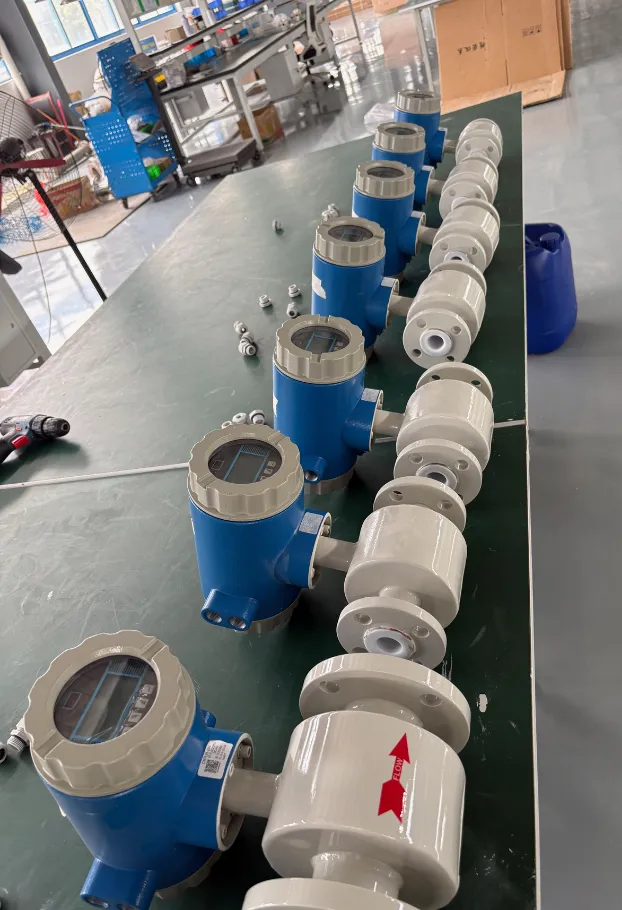
The WIKSTONE HNLD series is designed for conductive liquid measurement in water treatment, wastewater, chemicals, mining, pulp and paper, food processing and other industrial applications.
Available options include:
DN10–DN2000 pipeline sizes
Pipeline and insertion types
Flanged, threaded and sanitary connections
Integrated and remote transmitters
PTFE, PFA, EPDM and polyurethane liners
316L, Hastelloy, titanium, tantalum and wear-resistant electrodes
4–20mA, HART, Modbus and PROFIBUS
IP65 and IP68 protection
Explosion-proof configurations
View the WIKSTONE Electromagnetic Flowmeter product page for specifications, material options and available output signals.
Information Needed for a Quotation
To receive a suitable configuration, provide:
Liquid name and chemical composition
Minimum, normal and maximum flow rate
Pipe diameter
Process temperature
Process pressure
Solids content and particle size
Required process connection
Output and communication requirements
Integrated or remote installation
IP or explosion-proof requirements
Providing these details helps avoid oversizing, incompatible materials and unnecessary cost.
Frequently Asked Questions
Can an electromagnetic flowmeter measure sewage?
Yes. It can measure conductive sewage and wastewater, including liquids containing suspended solids, provided the measuring tube remains full.
What is the best liner for wastewater?
EPDM or rubber is commonly used for general wastewater. Polyurethane is more suitable for abrasive slurry, while PTFE or PFA is normally considered for corrosive liquids.
Can a magmeter measure diesel?
No. Diesel and most petroleum oils do not have sufficient electrical conductivity for standard electromagnetic measurement.
Does an electromagnetic flowmeter cause pressure loss?
Its full-bore measuring tube contains no internal obstruction, so the meter itself creates virtually no additional pressure loss. Reducers may produce some pressure loss when a smaller meter is installed.
Can it be connected to a PLC?
Yes. Depending on the configuration, the WIKSTONE HNLD series supports 4–20mA, HART, Modbus and PROFIBUS communication.
Choose the Correct Meter Before Ordering
The most important decisions are not the brand name or pipe diameter. They are:
Is the liquid conductive?
Is the meter sized for the real flow range?
Can the liner resist the medium?
Are the electrodes chemically compatible?
Will the pipe remain completely full?
Send WIKSTONE your application conditions to receive a recommended electromagnetic flowmeter configuration and quotation.
Contact WIKSTONE
Email: info@wikstone.com
WhatsApp: +86 18255162781
Related WIKSTONE Resources
Electromagnetic Flowmeter Product Specifications
Water and Wastewater Instrumentation Solutions
Industrial Flow Measurement Products

Contact Us
Recommended Products
-
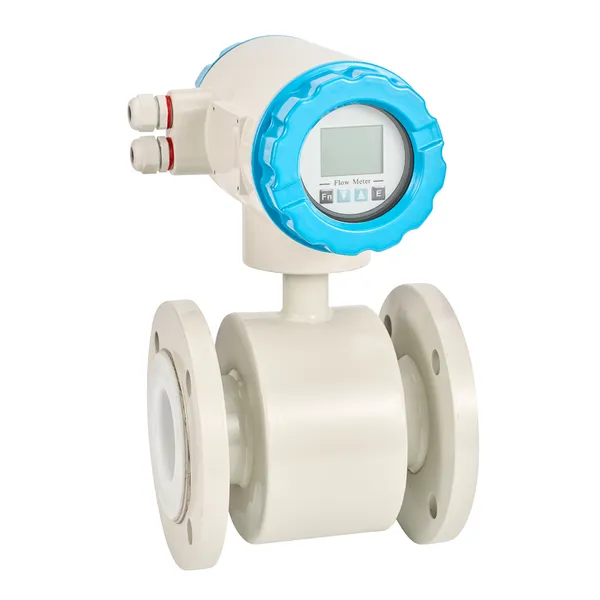
 Industrial Electromagnetic Flow Meter for Water, Wastewater, Chemicals and SlurryUS$ 200 - 280MOQ: 1 Piece
 -
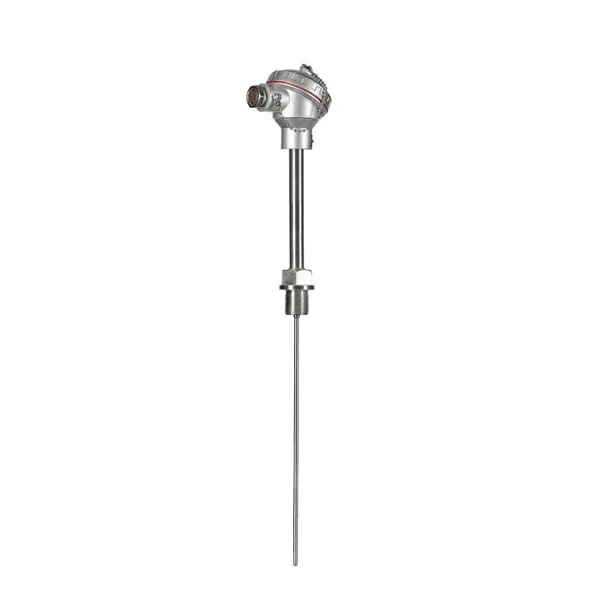
Industrial Pt100 RTD Temperature Sensor With Connection Head and Threaded Stainless Steel ProbeUS$ 35 - 38MOQ: 1 Piece
-
Integrated Temperature Transmitter With Digital Display Pt100 RTD Temperature SensorUS$ 40 - 50MOQ: 10 Pieces
-
Smart Pressure Transmitter 4-20mA HART for Oil Gas Chemical Water Treatment Industrial Pressure MeasurementUS$ 330 - 380MOQ: 1 Piece
-
Gauge Pressure Transmitter With Remote Diaphragm Seal for High Temperature and Corrosive MediaUS$ 350 - 380MOQ: 1 Piece
-
Smart Differential Pressure Transmitter 4-20mA HART for Flow Level Filter and Tank DP MeasurementUS$ 350 - 400MOQ: 1 Piece
-
HNYB60 Stainless Steel Manometer Glycerine or Silicone Oil Filled Pressure Gauge,1/4" NPT Lower Mount,16 BarUS$ 12 - 15MOQ: 10 Pieces
-
Industrial Bimetal Thermometer With Transmitter Output Back Connection Bimetal Temperature GaugeUS$ 35 - 42MOQ: 10 Pieces
-
K-Type Thermocouple Pt100 Temperature Sensor Explosion-proof Temperature TransmitterUS$ 35 - 43MOQ: 10 Pieces
-
Industrial Bimetal Thermometer Back Connection Bimetal Temperature GaugeUS$ 21 - 27MOQ: 10 Pieces